White Rocks on Mars: Perseverance Rover Finds Strong Evidence of Long-Lasting Wet Periods in Jezero Crater
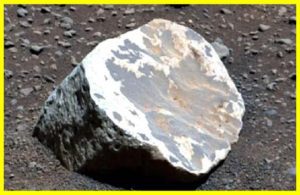
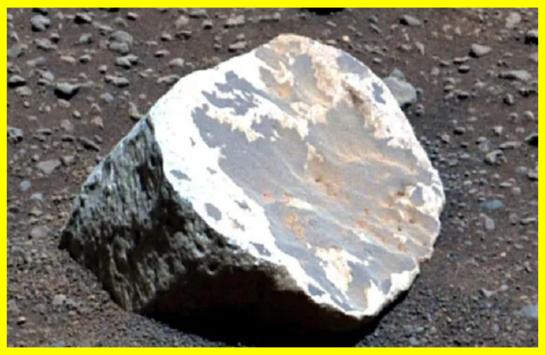
NASA’s Perseverance rover continues to provide groundbreaking data on the ancient history of Mars. Recent images from Jezero Crater reveal striking, bright-white rock fragments that may represent the most compelling evidence yet.
This evidence suggests long-term wet conditions on the Red Planet—not just short-term floods, but a stable environment with precipitation and surface water flows capable of profoundly altering the planet’s rocks.
What Kaolinite Reveals About Mars’ Ancient Climate
A detailed study of these light-toned fragments, using the rover’s onboard instruments, has identified high aluminum content and the presence of kaolinite (Wikipedia) — a clay mineral commonly formed on Earth through prolonged weathering in warm, humid environments.
On our planet, kaolinite typically develops where consistent rainfall gradually leaches silica from rocks, leaving behind aluminum-rich clays often seen in tropical regions.
If similar processes occurred on Mars, it implies that Jezero Crater once hosted stable wet conditions, potentially including lakes, rivers, and regular precipitation lasting thousands or even millions of years.
How These White Rocks Ended Up Scattered Across Jezero Crater
The white fragments are not confined to a single location; they appear as scattered “float rocks” along much of the rover’s traverse.
This distribution suggests they were transported by powerful water flows — possibly ancient rivers, floods, or the delta system that once fed a lake in the crater.
Jezero was selected as the landing site precisely because orbital imagery indicated evidence of a former river delta and persistent lake.
Competing Theories: Atmospheric Weathering vs. Hydrothermal Activity
Researchers are evaluating two primary formation scenarios for the kaolinite:
- Atmospheric weathering — Long-term exposure to rainfall and surface water in a relatively warm, humid climate (the scenario most exciting for astrobiology).
- Hydrothermal alteration — Hot water from volcanic or impact-related sources rapidly altering rocks, though this typically produces different chemical signatures (e.g., sulfates or iron oxides).
Samples already collected by Perseverance for the future Mars Sample Return mission will help scientists determine which process dominated.
VIDEO. NASA’s Perseverance Rover Captures Mars Vista As Clear As Day.
Why This Discovery Matters for the Search for Life on Mars
Confirmation of prolonged atmospheric rainfall would dramatically expand the timeframe during which Mars could have supported habitable conditions.
Rather than fleeting wet episodes, we would have evidence of a planet with stable liquid water, moderate temperatures, and active geological processes — ideal for the emergence and preservation of microbial life.
Jezero Crater remains one of the most promising locations in the search for signs of life on Mars. Each new finding from Perseverance brings us closer to answering whether the Red Planet was once home to biology.
Source: Alteration history of aluminum-rich rocks at Jezero crater, Mars — Communications Earth & Environment (December 2025), NASA/JPL-Caltech data.