Polish Researchers Uncover New Clues to Nazi ‘Golden Train’ Legend
In the enduring saga of World War II treasures, a team of Polish researchers has ignited fresh excitement by revealing groundbreaking data that could validate the existence of the infamous Nazi ‘golden train’.
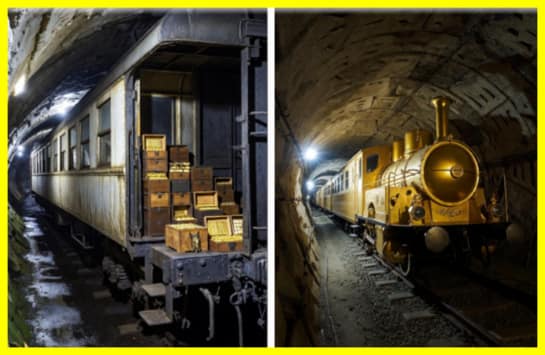
According to reports from Dziennik.pl and other outlets, a recent ground-penetrating radar scan in Lower Silesia has pinpointed an intriguing subsurface irregularity—potentially a concealed tunnel housing several rail cars from the 1940s.
For history buffs chasing WWII Nazi hideouts or tales of lost fortunes, this development raises tantalizing questions: Is this the breakthrough we’ve awaited, or another tantalizing mirage?
Breakdown of the Discovery: Radar Reveals Hidden Tunnel Near Wałbrzych
The expedition, dubbed “Golden Train Quest 2025,” focused on a wooded stretch outside Wałbrzych in southwestern Poland—a hotspot tied to prior digs in 2015-2016 that teased but never confirmed the legend.
Project leads report that ground-penetrating radar (GPR) technology captured a linear void suggestive of a tunnel, flanked by metallic signatures matching vintage train carriages.
One lead investigator emphasized the findings’ robustness: “These readings align seamlessly with geophysical and structural norms, free from anomalies or distortions.”
Building on echoes of those earlier efforts, the group is now petitioning local authorities for excavation permits to probe deeper. If greenlit, this could unearth artifacts from the war’s chaotic endgame.
Specialists in WWII archaeology are cautiously optimistic, noting GPR’s proven track record in similar hunts, though on-site validation remains essential.
The Myth of the Nazi Golden Train: From Breslau to Buried Secrets
The Nazi golden train folklore emerged in the war’s twilight hours, rooted in eyewitness accounts and declassified files.
As Allied forces closed in, SS operatives allegedly loaded a clandestine locomotive in Breslau (now Wrocław) with plundered riches: bullion, gems, masterpieces, and classified ledgers.
Bound for the Owl Mountains’ labyrinth of subterranean bunkers—part of the sprawling Project Riese—the train vanished mid-route, presumed dynamited into oblivion with its entrances sealed.
This narrative has fueled decades of quests, documentaries, and debates among historians of Nazi loot.
Fast-forward to 2025: With advanced tools like GPR illuminating what past searches missed, the tale feels closer to reality than ever. Could this anomaly rewrite chapters on the Third Reich’s desperate final gambit?
Cautions and Next Steps: Excavations Needed to Debunk or Confirm
Excitement tempered by scrutiny: No independent body has vetted the data yet, and skeptics warn that GPR signals can mimic natural formations or wartime debris.
Past claims, including dowsing pseudoscience, have muddied the waters, underscoring the need for rigorous digs and forensic analysis. If verified, however, this could yield a trove rivaling other WWII windfalls like the Amber Room fragments.
The team eyes collaborative efforts with Polish heritage agencies for ethical unearthing. Stay tuned as permissions unfold—will shovels soon pierce the earth?
