Chinese Satellite Narrowly Avoids Collision with SpaceX Starlink Satellite
A potentially dangerous incident recently occurred in low Earth orbit: one of SpaceX’s Starlink satellites came within approximately 200 meters of a Chinese spacecraft.
The event, which took place after the December 9, 2025 launch of the Chinese Kinetica-1 rocket, has highlighted growing concerns about orbital safety and coordination in an increasingly crowded space environment.
What Happened: Details of the Close Approach
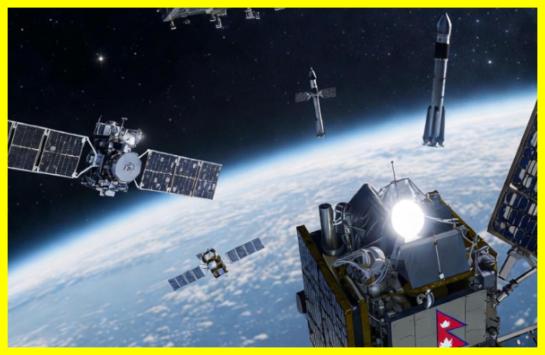
The Kinetica-1 rocket, operated by CAS Space, successfully deployed nine satellites belonging to various nations, including China, the United Arab Emirates, Egypt, and Nepal.
However, shortly after deployment, one of these newly launched satellites passed alarmingly close to an operational Starlink satellite (identified as STARLINK-6079) at an altitude of around 560 km.
SpaceX representatives noted that, to their knowledge, no prior coordination regarding the launch trajectory had been conducted with operators of existing satellites.
The lack of pre-launch communication between space actors is becoming a significant risk as the number of objects in orbit continues to rise rapidly.
CAS Space Response to the Incident
In response, CAS Space stated that it strictly follows all required safety protocols and utilizes ground-based tracking systems to prevent collisions.
If confirmed, this incident occurred nearly 48 hours after payload separation, by which time the launch mission had long concluded. CAS Space will coordinate with satellite operators to proceed. This calls for re-establishing collaborations between the two New Space ecosystems. https://t.co/bsuFLeguxo
— CAS Space (@cas_space) December 13, 2025
Our team is currently in contact for more details. All CAS Space launches select their launch windows using the ground-based space awareness system to avoid collisions with known satellites/debris. This is a mandatory procedure. We will work on identifying the exact details and… https://t.co/eNajj5cJxh
— CAS Space (@cas_space) December 13, 2025
The company emphasized that the close approach occurred approximately 48 hours after satellite deployment, at which point operational responsibility had transferred to the satellite owners (none of which are owned by CAS Space itself).
CAS Space is currently investigating the event, collecting additional data, and has expressed willingness to cooperate with other operators, including Starlink, to clarify the circumstances.
They also called for renewed collaboration between major space ecosystems to improve future coordination.
Experts point out that such near-misses are becoming more frequent due to the overcrowding of low Earth orbit. While Starlink satellites are equipped with autonomous collision-avoidance maneuvering systems, not all spacecraft have similar capabilities.
This incident underscores the urgent need for better international data sharing and coordination to ensure long-term space safety. As of 2025, over 13,000 active satellites are in orbit, with the majority belonging to large constellations like Starlink.